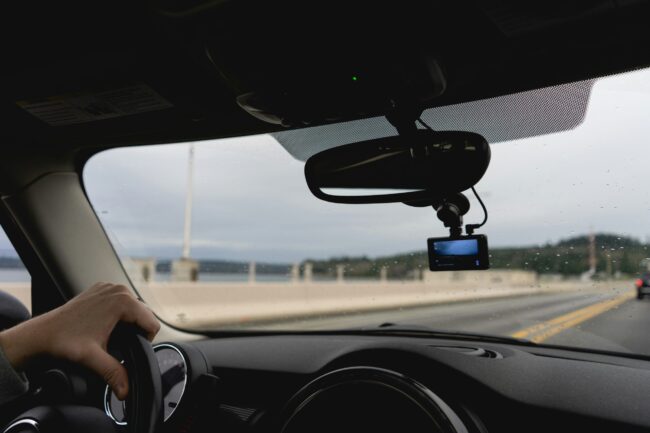
Dash cams have gone from an enthusiast curiosity to mainstream motoring equipment over the past decade, and for good reason. In a fault dispute after an accident, footage from a dash cam can be the difference between a successful claim and an expensive he-said-she-said stalemate. Insurance companies know this — some now offer discounts for fitted dash cams, and many will request footage as a matter of course following a claim. If you don’t have one yet, here’s what to look for and what’s worth buying in 2026.
What to Look For
Resolution. 1080p Full HD was once the standard; 1440p (2.5K) and 4K are now widely available and worth the modest premium. Higher resolution matters for capturing number plates at distance and in poor light — the primary practical requirement of a dash cam. Don’t be misled by interpolated resolution figures; look for native sensor resolution.
Night vision. A dash cam that produces clear daytime footage but turns to muddy darkness at night is only half useful. Look for cameras with good low-light performance — Sony Starvis or similar sensor technology is a reliable indicator. Check example footage in low-light conditions before buying.
Field of view. Most dash cams offer between 120 and 170 degrees field of view. Wider is generally better for capturing the full lane width and roadside detail, but very wide angles can introduce distortion that affects the readability of number plates toward the edges of frame. Around 140 degrees is a practical sweet spot.
Front and rear. A front-only camera captures most incidents, since the majority of accidents involve the vehicle ahead. A dual-channel system (front and rear) provides evidence for rear-end shunts and tailgating, which are increasingly common on UK roads. If budget allows, a dual-channel system is worth the extra cost.
Parking mode. Some cameras offer a parking surveillance mode, recording when the car is parked if triggered by motion or impact. This requires either hardwiring to a permanent live feed or a parking mode battery, but can be invaluable for capturing hit-and-run incidents in car parks.
GPS. GPS logging records your speed and location alongside the video, which can be useful in a dispute but also means your footage records how fast you were going. Worth considering in both directions.
What’s Worth Buying
The dash cam market has matured considerably and there are good options at multiple price points.
Nextbase 622GW. Nextbase are the dominant UK brand for good reason, and the 622GW remains one of the best all-round cameras available. 4K recording, excellent night performance, built-in GPS, emergency SOS functionality, and a clean companion app make it a comprehensive package. It’s not cheap, but it’s reliable, well-supported, and the image quality is genuinely excellent. If you want the best single-channel camera without getting into professional territory, this is it.
Viofo A229 Pro. A strong challenger from a brand that has built a reputation among enthusiasts. The A229 Pro offers excellent 4K front footage, good rear camera performance in the dual-channel version, and competitive pricing. Less consumer-friendly out of the box than Nextbase, but the image quality per pound is difficult to beat.
Garmin Dash Cam Mini 2. For those who want something genuinely unobtrusive, the Garmin Mini 2 is remarkably compact — about the size of a car key fob — and produces solid 1080p footage. It lacks a screen, which means setup requires the companion app, but it’s an excellent choice if you want something that’s almost invisible behind the rear-view mirror.
Blackvue DR970X-2CH. If you want parking mode capability and professional-grade quality, Blackvue’s flagship dual-channel system is the benchmark. Korean-made, exceptionally well-built, with cloud connectivity for remote access to footage and excellent low-light performance. Hardwiring is recommended for full functionality, which adds cost and installation effort, but the result is a genuinely comprehensive vehicle security system.
Installation Tips
Positioning matters. The camera should be mounted behind the rear-view mirror to minimise driver distraction and obstruction of the forward view. In most countries, mounting a dash cam on the windscreen in the driver’s direct line of sight is illegal.
Routing the cable neatly — tucked behind the headliner and down the A-pillar — takes twenty minutes and makes a significant difference to the finished look. Most cameras come with enough cable; a trim removal tool (a few pounds from a motor factor) makes the job much easier.
For parking mode, professional hardwiring to an ignition-switched live feed and a permanent live feed is the proper solution. Many independent car audio shops will do this for £30–£50 fitted.
Does It Reduce Your Insurance?
Some insurers offer discounts for dash cams — typically in the range of 5–10% — though this varies widely by provider and is worth checking at renewal. The more significant insurance benefit is in claims handling: footage can accelerate a fault determination and, in a non-fault claim, help recover uninsured losses more effectively.
The dash cam market has reached a point where there’s genuinely no reason not to have one. At the budget end, usable cameras start from around £30. At the premium end, a properly installed Blackvue or Nextbase system provides comprehensive protection for under £400 fitted. For most drivers, something in the £80–£150 range hits the sweet spot of quality, reliability, and value.
Leave a Reply