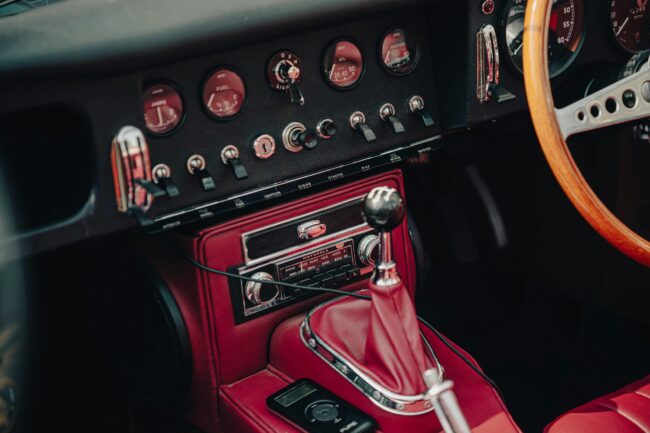
There was a time when getting a radio fitted to your car was an optional extra worth specifying. Then it became standard. Then it became a given. And now, in 2026, the traditional car radio — tuned to a station, playing whatever comes next, connecting you to the same broadcast as millions of other listeners — is genuinely on its way out. It’s worth pausing to consider what that means.
How We Got Here
The trajectory is familiar enough. Cassette players gave way to CD players. CD players gave way to MP3 compatibility and aux inputs. Then came Bluetooth, and suddenly your phone was the source of everything. Spotify, Apple Music, podcasts, audiobooks — the smartphone made the broadcast model look almost quaint.
The next step was deeper integration. Apple CarPlay and Android Auto, which mirror your phone’s interface onto the car’s own screen, became near-universal on new cars from the mid-2010s onwards. By the time these systems became standard equipment rather than a premium option, the writing was on the wall for anything that required you to interact with the car’s own infotainment system on its own terms.
Streaming has done to radio what streaming did to television. The difference is that radio has a specific quality that on-demand content lacks — and it’s only now that it’s genuinely under threat that people are starting to articulate what that quality is.
What Radio Actually Was
Radio was, and in many places still is, a shared experience. When a major news event broke, you turned on the radio. When a song became inescapable, it was because it was being played on stations heard by millions simultaneously. The DJ who talked over the intro, the traffic update that turned out to be relevant, the interview with someone you hadn’t chosen to hear but found yourself interested in anyway — these were accidents of scheduling that streaming cannot replicate by design.
There’s also a local dimension that streaming struggles with. Local radio — genuinely local, not just regional — provided a connection to a specific place that Spotify’s algorithm, however sophisticated, cannot fake. The station that tells you the B road through the village is flooded, or covers the local football club’s result, or interviews the councillor about the planning decision — that’s a different thing from a curated playlist.
The Screens Take Over
Walk into a new car showroom in 2026 and the centrepiece of almost every interior is a screen. Sometimes a very large one. Tesla pioneered the approach of replacing most physical controls with a single touchscreen, and the rest of the industry has followed to varying degrees, not always wisely.
These screens are primarily designed around connectivity — phone integration, streaming services, navigation. The DAB radio is still in there somewhere, usually accessible via a menu, but it’s no longer the default. The default, increasingly, is whatever was playing on your phone last time you got in the car.
For younger drivers who have grown up with on-demand everything, this is entirely natural. For anyone who remembers the car radio as the primary source of in-car audio — and that’s a substantial portion of the driving population — the shift has been quiet but significant.
DAB’s Unfinished Business
The switchover from FM to DAB was supposed to happen years ago and still hasn’t been completed. The government has repeatedly deferred the FM switch-off date, and for good reason — DAB coverage, particularly in rural areas, remains patchy. Drive through much of Scotland, Wales, or the more remote parts of England and DAB signal is unreliable enough that FM remains the more practical option.
The irony is that the FM switch-off is now being deferred partly because streaming has changed the calculation. If a significant proportion of listeners are using internet-connected audio rather than broadcast radio anyway, the urgency of completing the DAB transition has diminished. The goalposts have moved while the game changed around them.
What Gets Lost
The shift to on-demand audio is, in most measurable ways, an improvement. Better sound quality, more choice, no adverts if you pay for a subscription, content perfectly matched to your preferences. The algorithms are genuinely good at finding things you’ll like.
What gets lost is harder to quantify. Serendipity — the thing you didn’t know you wanted to hear. The shared cultural moment. The sense of being connected, while driving alone, to something being experienced simultaneously by other people.
These aren’t trivial losses, but they’re the kind that are only noticed in retrospect. Nobody switches off Spotify and turns on the radio because they’ve concluded that algorithmic curation is philosophically problematic. They do it occasionally, almost by accident, and find themselves listening to an interview or a song or a piece of news that they would never have chosen, and are glad of it.
Radio Isn’t Dead Yet
It would be wrong to write the obituary prematurely. Radio listening in cars remains significant, and broadcast radio has adapted — streaming its output online, building podcast extensions of programmes, finding ways to exist within the new infrastructure rather than being replaced by it.
But the car radio as a default, as the thing you turn on when you get in the car because there’s nothing else, is going. The generation of drivers now learning to drive will likely never have that relationship with it. What replaces it is more personalised, more convenient, and more chosen — which is mostly good, and only occasionally a loss.
Leave a Reply