A few years ago, Chinese car brands were a curiosity in the UK market. Today, they’re a significant and growing presence — and for good reason. Models from BYD, MG, Omoda, Jaecoo, and others are topping sales charts, winning comparison tests, and attracting buyers who would never have considered them a few years ago. But plenty of scepticism remains. Here’s a fair assessment of where Chinese cars stand in 2026.
The Brands Now Selling in the UK
The Chinese car presence in Britain has expanded rapidly. The established players include:
MG — technically a British brand by name and heritage, but owned by SAIC since 2011 and designed and manufactured in China. MG has been the gateway Chinese brand for many UK buyers, offering strong value across petrol, hybrid, and electric models. The MG4 electric in particular has been a genuine disruptor.
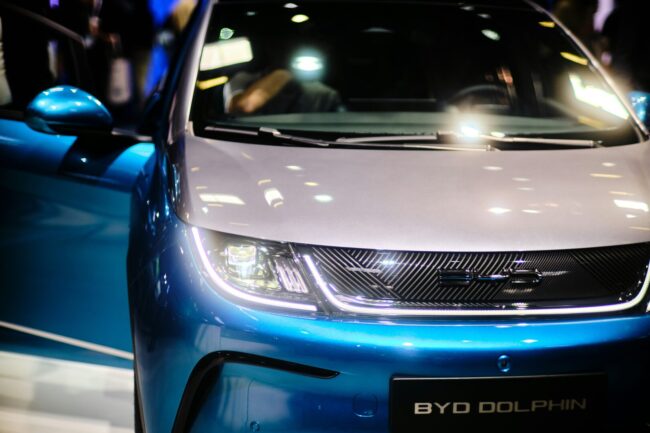
BYD — now the world’s largest EV manufacturer, having overtaken Tesla in global sales. The Seal, Atto 3, and Seagull represent serious electric vehicles with impressive specifications, competitive pricing, and — by most accounts — strong build quality.
Omoda and Jaecoo — brands from Chery Automobile, which have established a dealer network in the UK relatively recently. The Omoda 5 and Jaecoo 7 are mid-size SUVs that have attracted significant interest on Carwow and other platforms, primarily on price-to-specification grounds.
GWM (Great Wall Motor) / Ora — smaller presence but notable for the Ora 03, a retro-styled electric hatchback.
Xpeng, Nio, and Lynk & Co are present in Europe but have limited or developing UK footprints.
Are They Actually Good?
The honest answer, based on independent tests and owner reviews, is: increasingly yes. The days when “Chinese car” was shorthand for poor quality and questionable safety are largely over for the brands now competing in the UK market.
BYD vehicles in particular have scored well in Euro NCAP crash tests, carry sophisticated technology, and use battery systems that BYD designs and manufactures in-house — a genuine advantage in the EV space. The Seal saloon, competing with the Tesla Model 3, has attracted positive reviews from mainstream UK motoring outlets.
MG vehicles have established a track record over several years of UK sales and have generally proven reliable in owner surveys, though some concerns about long-term durability and parts availability persist.
The newer entrants — Omoda, Jaecoo — are newer quantities. Initial reviews have been broadly positive on specification and value grounds, with some reservations about ride quality and infotainment refinement.
The Value Proposition
The primary appeal of Chinese cars in the UK is straightforward: they offer more car for the money. An Omoda 5 with a twin-screen interior, leather seats, and a comprehensive technology package costs significantly less than a European or Japanese equivalent with similar specification. Whether that gap is justified or whether it reflects compromises elsewhere is the question buyers need to answer for themselves.
In the electric vehicle segment, BYD in particular has used the cost advantage of vertical integration — making its own batteries, semiconductors, and motors — to undercut European and Korean competitors significantly. The Seal and Atto 3 offer genuine competition to the Volkswagen ID.4 and Hyundai Ioniq 5 at lower prices.
The Legitimate Concerns
Several concerns about Chinese cars are worth taking seriously:
Resale values. The used market for Chinese brands — particularly the newer entrants — is still establishing itself. Residual values are an unknown quantity, and buyers financing a new Omoda or BYD on PCP should check carefully what residual value the finance company is assuming, because optimistic assumptions can lead to negative equity.
Dealer network and aftersales. Established brands have decades of dealer investment and parts infrastructure. Newer Chinese entrants are building their networks from scratch. If you live in an area with limited coverage, the cost and inconvenience of servicing or warranty work could be significant.
Parts availability. For a relatively new brand in the UK, sourcing parts for an accident repair or unusual fault may take longer than for an established manufacturer. Check that your insurer is comfortable with the brand before buying.
Data and connectivity. Several Chinese brands’ connected car services store data on servers in China. Some buyers have concerns about data privacy. This is worth investigating for brands whose connectivity features you plan to use.
The Import Duty Question
The EU has imposed additional import tariffs on Chinese-made electric vehicles, and the UK government is reviewing its position. Increased tariffs could affect pricing significantly for some models. Buying a Chinese EV in 2026 means there’s some uncertainty about how tariff changes might affect the brand’s UK pricing strategy in the coming years.
Should You Buy One?
If value for money is your primary driver, Chinese brands deserve serious consideration — particularly BYD and MG, which have established track records and dealer networks. For the newer entrants, a degree of caution is reasonable: the price differential is attractive, but the unknowns around residuals, aftersales, and long-term reliability are real. Approach them as you would any new brand in an established market — with interest, but with the same due diligence you’d apply to any significant purchase.
Leave a Reply