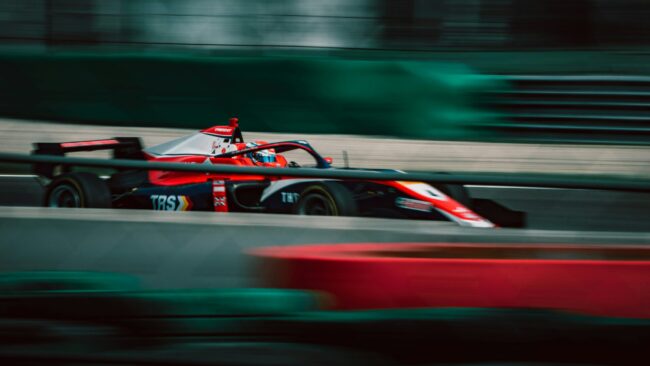
For anyone who loves motorsport, it’s a question that keeps coming up: is Formula E worth your time? And the honest answer, in 2026, is more interesting than either its evangelists or detractors would have you believe. Let’s put both series in the dock and give them a fair hearing.
Formula 1: Still the Pinnacle, But Not Without Problems
Formula 1 remains the world’s most-watched motorsport series, and the reasons aren’t hard to find. The cars are extraordinary — the fastest circuit racing machines ever built. The calendar spans the globe. The narratives around team orders, constructor politics, and the ongoing championship battles generate a level of media coverage that Formula E can only dream of.
The Netflix effect — Drive to Survive and its successors — has introduced a generation of fans who engage with F1 as much as a soap opera as a sport, which is fine, even if it occasionally frustrates the purists.
But Formula 1 has real problems as a spectacle. Overtaking has become less common as cars have become more efficient at following a pre-set optimum line. The midfield is often more interesting than the front, where constructor budgets create such a performance gap that genuine surprise results are rare. Races at some circuits — Monaco being the obvious example — can be processional to the point of soporific.
The 2026 regulation changes introducing new power unit rules have shaken up the competitive order to a degree, but the core dynamic of money buying performance is structural and isn’t going anywhere.
Formula E: Better Than You Might Think
Formula E launched in 2014 to considerable scepticism. The early cars were slow compared to F1, the racing happened on city streets rather than purpose-built circuits, and — most critically — the cars ran out of charge mid-race, requiring drivers to swap vehicles. It was, charitably, a work in progress.
The series has come a long way. The Gen3 cars are genuinely rapid — not F1 fast, but properly quick by any other measure — and the on-track action has benefited from the characteristics of street circuits, which tend to produce closer, more incident-prone racing than the wide, open layouts of many F1 venues. Monaco may be boring in F1; Bern, Jakarta, and Monaco in Formula E are consistently entertaining.
The series has also attracted serious manufacturers. Porsche, Nissan, Jaguar, DS Automobiles, and Maserati are all active in the current championship, which gives it a level of automotive credibility it lacked in the early seasons.
The Key Differences
The Attack Mode system — where drivers earn a temporary power boost by driving through a designated off-racing-line zone — is divisive. Purists find it artificial; others enjoy the strategic layer it adds. It’s worth watching a race or two before forming a strong opinion either way.
The fanboost concept, where fans voted to give their favourite driver extra power, has been quietly retired, which was the right call. It was a gimmick that undermined credibility.
Formula E races are shorter than F1 grands prix — typically under an hour of racing — and the championship calendar is more compact. This makes it a less significant time commitment, which isn’t a trivial consideration for the casual viewer.
The Environmental Argument
Formula E’s marketing leans heavily on its green credentials, and while the series is genuinely more environmentally friendly than F1 — the logistics are smaller, the calendar less sprawling — the idea that a motorsport series is environmentally virtuous in any meaningful absolute sense deserves healthy scepticism. Both series are making sustainability commitments that are worth holding them to, but neither is going to feature prominently in anyone’s carbon reduction strategy.
So Which Should You Watch?
The honest answer is that they’re not really competitors for the same audience. Formula 1 is big-budget, globally reaching, technically extraordinary motorsport, with all the entertainment and frustration that entails. Formula E is lower-stakes, more wheel-to-wheel, and frankly better for a viewer who hasn’t got three hours to spare.
If you’ve never watched Formula E, the suggestion is to pick a street circuit race — Monaco, São Paulo, or Tokyo — from the current season and give it 45 minutes. Judge it on those terms rather than comparing it to F1, which it was never designed to replace.
If you’re a committed F1 fan frustrated by processional racing, Formula E’s street circuits are genuinely worth sampling. The racing is messier, the cars less spectacular, but the action is more consistently unpredictable.
They’re both worth watching. One is blockbuster cinema; the other is a sharp, efficient thriller that doesn’t outstay its welcome. The motorsport calendar is big enough for both.
Leave a Reply