Towing is one of those areas of driving where the gap between what drivers think they know and what the law actually requires is surprisingly wide. Get it wrong and you risk a fine, penalty points, or worse — an accident caused by a vehicle combination you weren’t legally or practically equipped to handle. Here’s a clear guide to the rules, the practicalities, and what licence you need.
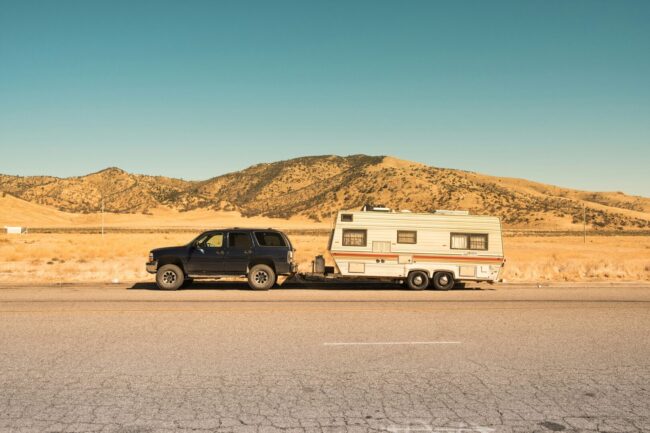
Licence Entitlement: What You’re Legally Allowed to Tow
Your licence entitlement for towing depends on when you passed your driving test.
If you passed before 1 January 1997, you automatically have category BE entitlement on your licence, which allows you to tow a trailer or caravan with a Maximum Authorised Mass (MAM) of up to 8,250kg — effectively unlimited for any caravan or trailer a car can physically handle.
If you passed after 1 January 1997, your standard category B licence allows you to tow a trailer with a MAM of up to 3,500kg, provided the combined weight of the car and trailer doesn’t exceed 3,500kg. This rules out towing a heavy caravan with many cars — because the car alone may weigh 1,500kg and a caravan may weigh 1,300kg or more, leaving very little margin.
Specifically, under the post-1997 rules, you can tow a trailer where the MAM of the trailer doesn’t exceed the car’s unladen kerb weight. So if your car weighs 1,600kg unladen, you can legally tow a trailer with a MAM of up to 1,600kg. For larger trailers, you need to pass an additional B+E test.
The 85% Rule and Safe Towing Ratios
The legal limits and the safe limits are different things. The towcar industry and caravan organisations typically recommend that the laden weight of the caravan or trailer should not exceed 85% of the car’s kerbweight. At 100% it becomes difficult to control — above 100%, the risk of instability and snaking increases significantly.
Before buying a caravan, check the kerbweight of your car (in the handbook or V5C) and apply the 85% rule. A car with a 1,600kg kerbweight should ideally tow a caravan with a laden weight no greater than 1,360kg.
Towbar and Towing Capacity
Your car’s towbar must be type-approved and correctly fitted. An incorrectly fitted towbar affects handling and could cause a failure at a critical moment. The towbar must match the car’s towing capacity as specified by the manufacturer — this is the maximum legal towed weight for that vehicle and cannot be exceeded.
The towball rating is a separate consideration — it specifies the maximum nose weight (the downward force on the towball). Exceeding the nose weight limit causes the rear of the car to squat, affecting steering and stability. The correct nose weight for most caravans is typically 75–100kg.
Speed Limits When Towing
Speed limits for vehicles towing a trailer are lower than for solo cars:
On motorways: 60mph maximum (not 70mph). On dual carriageways: 60mph maximum. On single carriageways: 50mph maximum (not 60mph).
These limits apply regardless of the speed limit on the road. A 70mph motorway limit for solo cars becomes a 60mph limit when towing. This is a common source of confusion — and fines.
Mirrors
If the trailer or caravan is wider than your car’s mirrors, you must fit extended towing mirrors. Driving without adequate rearward vision when towing is an offence. Extended mirrors are inexpensive and widely available — clip-on versions fit most cars without modification.
Number Plates
The trailer or caravan must display a number plate identical to the towing vehicle’s rear plate. The plate must be illuminated at night. Trailers sold in the UK come with a bracket for a plate — ensuring it’s fitted and visible is the owner’s responsibility.
Stabilisers
A hitch stabiliser (also called a friction stabiliser or damper) significantly reduces the risk of caravan sway and snaking. It’s not a legal requirement, but it’s strongly recommended — particularly for less experienced towers or when the caravan is at or near the 85% ratio. Most experienced caravanners consider them essential.
Loading the Trailer or Caravan
How you load a trailer affects stability as much as the towing ratio. Heavier items should be loaded low and forward of the axle to keep the nose weight within specification. Avoid overloading the rear of the trailer, which reduces nose weight and increases the risk of snaking.
Motorway and High-Speed Towing
Caravan instability — the characteristic side-to-side snaking that can lead to loss of control — is most likely to occur at higher speeds, when passing or being passed by large vehicles, and in crosswinds. The response to the onset of snaking is to ease off the throttle gently and do not brake sharply. Braking while snaking can make the situation worse. Let the speed reduce naturally until stability returns.
Many modern cars with electronic stability control have specific tow-assist functions that help manage trailer sway. If your car has this feature, make sure it’s enabled before towing.
Towing Courses
The Camping and Caravanning Club and the Caravan and Motorhome Club both offer towing courses — typically a half or full day of practical instruction in a safe environment. For first-time towers or those returning to towing after a break, a course is a worthwhile investment. The skills involved in reversing a trailer accurately, coupling and uncoupling safely, and managing sway are all learnable — but they benefit from supervised practice.
Leave a Reply