Category.

A Baby Ferrari?

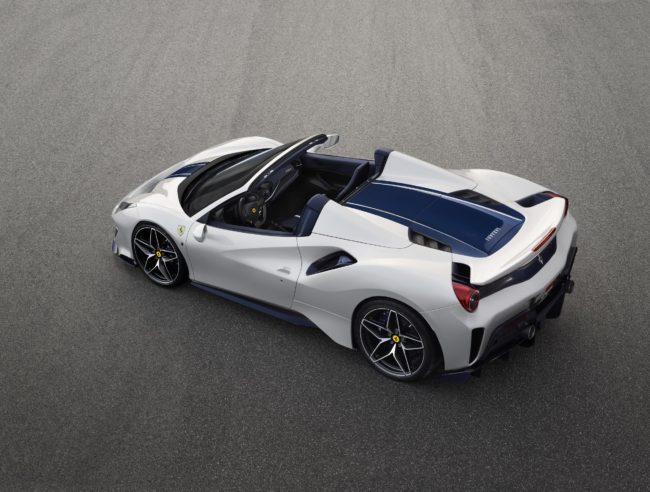
The Ferrari California

Let’s get the facts out of the way first shall we? The Ferrari California is a two door open topped sports car (well aren’t they all) that’s front mid-engined and featuring a lovely direct injection 4.3 litre V8 with an output of 453BHP. There’s no figure on the price yet, or the fuel consumption. Not a surprise on either really, you don’t want to put people off after all…

It’s always an event when a new supercar comes along, especially when it looks as damn good as the car above. It’s the sort of thing that people will stop and stare at, or if they’re lucky enough, have sex with supermodels in. For the rest of us mere mortals, we simply get to see it on the Internet or at a motorshow, where it will stand sterile, taunting us with all that unused power.

It is rumoured that this Ferrari, the California, is to be fitted with a V8 that is going to be in front of the driver, yet still mid-mounted (behind those all important front wheels). It should mean a change in dynamics, but it’s not as if Ferrari doesn’t know what they’re doing. The name, for instance, harks back to various other Ferraris that have been open-topped, with owners driving along with the wind in their hair.

As with a number of other Ferraris, this is a car that will feature a transaxle setup. This is both good for power and weight distribution, giving the car a more dynamic load setup. Naturally, this means your brand new California should be able to guided like a rocket around your chosen city streets – or track for that matter.

For power, Ferrari have said that the big V8 lump should shove the car up to 60 in less than 4 seconds – so a bit more than your average hot hatch and in fact faster than a significant number of exotics. What will really differentiate it then will be that handling and the lovely wail that you should get from the lump up at the front. If it doesn’t sound special, that will surely shoot it in the front, especially as an open topped car.

Will you want one? Well yes, of course you blood dolt. It’s a Ferrari – and it doesn’t have a roof to boot. Okay, so you can afford a luxury car like this – will you buy one in the face of 911 Turbos, Lamborghini Gallardos and even imported Nissan GT-R’s? Well, that remains to be seen. It has the power and the style. It also though comes with an estimated price tag that’ll push it past the value of a standard F430.

With that in mind, I don’t think it will it will float my boat enough. I’m quite hardcore when it comes to these things, and the roar grunt of the F430 – with those quad exhausts and the screaming engine (along with the tried and tested formula) would still make it my choice. However, let’s keep our eyes open and I’ll give you regular updates on this motor. Who knows, I might just change my mind when I sit in one…

Mr Butterscotch

Posted by: Mr Butterscotch

Want to know more about this author Mr Butterscotch?

Peugeot RC Z - Not a 350 Z Beater

The Peugeot RC Z

It seems that these days Peugeot has been undergoing a bit of a renaissance so to speak.  What I mean is that the cars they are producing seem to be getting nicer interiors, better profiles and doing a little better in the depreciation stakes.  Not only that, but clearly new designs are starting to get green-lit.  Just like this one.

This is the new Peugeot 308 RC Z.  Last year it was just a concept, now it is going into production.  There’s no confirmed name yet, but the RC Z is a safe bet for the time being (no doubt dropping the 308 moniker to avoid comparisons to the hatch) and it has been created to offer some direct competition to the Audi TT and other premium coupes.

So what about the differences from the concept to the actual vehicle?  Well, the crazy double-bump polycarbonate rear window won’t feature – however the Bell and Ross dashboard stays (so a touch of class in there).  Overall, it is one of the few cars where the car that rolls of the production line is pretty damn close to the concept.

It’s got the usual Peugeot coupe styling of a leading front and an extended rear tail.  There’s a lower spoiler, chrome radiator grille and fresh headlights.  There’s a rear diffuser on there, a twin pipe exhaust and that slope will remain as it absolves the car from the need of a fancy (and/or stupid looking) spoiler. As this is still in concept stage at the moment, there are a few things that will change.

As with the concept, the production vehicle will remain a 2+2, meaning extremely small back seats suitable for golf clubs but almost certainly not for people. One of the more bizarre features of many coupes, that is.  Why stick in seats when you’re almost sure to never use them?

Stats are probably going to be a 1.6 litre turbocharged engine, 170+ BHP channelled through the front wheels and 0-60 of around seven seconds.  It’ll be placed around the £17,000 mark when released.  Would I buy one?  I’m not sure.

Why is that, I hear you ask… Well, let’s put it this way.  It isn’t exactly the most masculine looking thing out there is it?  If the Nissan 350 Z is a real man’s muscle coupe, this is perhaps more of a ‘Women of Sex and the City’ type of show here.  Not that it’ll be a bad vehicle mind – I think it will actually be quite good.  It won’t knock the Audi TT off its perch though, not least given that it has a new diesel version coming out soon.

Mr Butterscotch

Posted by: Mr Butterscotch

Want to know more about this author Mr Butterscotch?

The Sexy Green Lotus

In case you just can’t decide which fuel you want to use, perhaps the new Lotus Exige 270E Tri-Fuel is going to be your sort of thing. It has a top speed of 158mph and charges from zero to 60 in 3.9 seconds, yet manages to chuck out less of the black stuff than most standard hatchbacks. How’s that work then?

This amazing little car can run on normal petrol, bio-ethanol or methanol – you choose the fuel. Given the current climate, I doubt many will choose normal petrol though. Amazingly, the two biofuels can be added to a part-petrol mix to make this one of the most environmentally friendly sports cars around.

So, is this really a development then? Well yes, of course. Not least because in the current climate, if you’re not driving something a little more friendly than a standard 2.0 litre petrol you’re not exactly going to fit in with the Joneses. Not only that, but climate change is, like it or not, a fact.

Whether you want to debate it is due to cars or not however remains a separate issue. Granted, this car is not a going to change the planet. But, and I use a big BUT here, it does show that traditional sports car manufacturers are actually considering their product and their customers. People are interested in doing their bit, whether that’s switching to a small diesel or a bio-fuel powered sports car. Nonetheless, this car is special.

This car is special because it is a Lotus Exige. If you’ve never been on a Lotus experience day, I can wholeheartedly recommend it. Why? Lotus makes simply fantastic cars. The Exige is, without a doubt, the pinnacle of the hard work that goes into one of their creations. It is the perfect pocket rocket whether you’re a track day star or a sports car enthusiast. It has a mix of raw power matched with very light weight (875kgs) making it a superb undiluted sports car.

How does it handle? Well, give it a few revs and you’ll see what the fuss is about. It will simply launch forwards, taking your head with it. Push on hard and at 6,000 rpm the VVT engine will open up for a boost of power. This is matched to a lovely slick, quick-shift gearbox. You won’t be left wanting in that regard.

The car itself is simply a dream – the steering is sharp, with a nicely weighted feel. You’ll get almost completely flat cornering, though if you want to have fun that’s possible too. The miles of grip the car provides will give you a lot of reassurance if you don’t happen to be the next Lewis Hamilton. It’s not all dreams of power though, given that you’ll find the frustrations of the car are evident in a lack of space and not-that-great visibility. Nonetheless, it is an amazing feat of engineering.

I think that shows why I like the Lotus Exige 270E so much. Yes, it’s a Lotus Exige. But it’s better. It gives you all that the standard car offers, then adds a big dollop of ‘yes, we do care’ on top. If you buy one – after it has been showcased at the Co-operative Sexy Green Car Show in Cornwall on 23-31st May – you’ll be the envy of just about anyone on the road, let alone the race track.

If the points above haven’t convinced you of the fact, let me just spell it out to you. The Lotus Exige (especially in this powered up, more environmentally friendly form) is a symbol. It represents all that’s right about driving – control, power and manoeuvrability. Best of all, you’ll never get bored driving it. So, let’s all give some respect to the clever folks at Hethel.

Mr Butterscotch

Posted by: Mr Butterscotch

Want to know more about this author Mr Butterscotch?

Renault Laguna GT

The Renault Laguna GT.

GT cars are wonderful in theory. If you’re not sure what I’m talking about, I’m referring to Grand Touring vehicles. These are the vehicles that should be able to move you across the countries of Europe with little problem, plenty of comfort and even more style. Alongside this, a GT car should be quick. Really quite quick. After all, you don’t want to get stuck in rural France now do you?

Renault isn’t known normally for GT cars - you could say that’s a shame given that the Laguna GT looks really quite good. Granted, it is perhaps still too mundane for some (if you’ve seen the Alfa Romeo Blackline GT you’ll know what I mean) but nonetheless, the front-end redesign looks stylish and the car has some decent curves.

Fitting into the family saloon segment of the market, the standard Renault Laguna is a car that is really rather dull - that makes it a break away for the company that brings such bizarre designs as the Megane (the only car with a big arse) and the Twingo - the F1 styled variety of which I’m keen to have a go of. So can this lowly start really provide something you’ll be desperate to drive?

Where It Stands

The GT offering is the absolute top of the range for both the tourer (estate body type) and the hatchback (though similarly to the Vauxhall Vectra, it looks more like a saloon than a hatch). Naturally as it is at the top of the tree you’ll get a lot more extra kit for your money. Whether it’s truly worth it depends on what you want.

The Look
Externally, there’s a much larger black mesh front grill to provide a more menacing look. The headlights stand out a lot more with this look, whilst the eighteen-inch alloys are one of the standout features of the car. They really do make a different to the look and feel. Darkened rear lights, twinned chrome exhausts and lots of GT badges round off the look of the car.

Inside
It is really the internals however of the car that will sell it to you (if you’re going to buy). It is just as good (luckily) as the standard Laguna, with added styling in the shape of two tone leather seats and alcantara sports seats that’ll hug you nicely as you’re driving down to Dover. There’s also a three spoke steering wheel that is flat bottomed in true racing style - just another touch that makes the car a little bit special.

Driving Dynamics
But what’s actually changed when moving from a boring saloon/hatch/estate to something a bit more involving like a GT car? I’m always sceptical about a current car being made into a GT, but luckily the Laguna doesn’t disappoint. Renault has used their much-acclaimed Active Drive four-wheel-steering system on the chassis to create a much more involved driving experience. The science behind this is simple but the level of control is much improved - essentially all four wheels will turn, instead of just the front two. You’ll like it a lot.

Performance

A GT badge, as mentioned, should always mean a bit more power. In this regard, the Laguna is no slouch (it’s hardly a supercar either mind you). The time of 0-60 in 7.8 seconds is very reasonable for the petrol, along with a 145mph top speed. These figures are for the 2.0 litre turbo, however you could opt for the diesel that should give you closer to 40mph and similar power.

And Finally…
With the coming of May seeing this car going on general release, it looks like we’re in for a GT time for Spring. Prices start from a not inconceivable £21,050 for the Petrol.

Mr Butterscotch

Posted by: Mr Butterscotch

Want to know more about this author Mr Butterscotch?

Astra Meets A Race Track

Vauxhall Astra Nurburgring Limited Edition

What happens when you take a regular hatchback and make it really, really quite fast?  You get the Vauxhall Astra VXR.  What happens when you then decide to mod the car in honour of one of the most famous race tracks in the world?  You get exactly what is shown above - an Alpine white racer with matching alloys, chequered flag graphics and much more.  This is the Vauxhall Astra VXR Nurburgring Edition.

The Vauxhall Astra VXR has 240PS and 320Nm of torque, which is a lot of power.  This is all channelled through to the front wheels - so you may find it a little happy with the understeer.  Not only that, but if you recall Clarkson’s test drive on Top Gear, you might remember how it was quite happy to decide where it wanted to go through the use of torque steer.

For those who don’t know, this where the sheer force of torque running through the car will pull the steering wheel - in the case of the test car on Top Gear it went to the left.  Great if you’re… um… turning left.  Not so useful if you’re doing anything else really.

In spite of the faults listed above, the Astra VXR is a very useful car, having enough shove to pull you to 60 in only 6.2 seconds - making it one of the fastest hot hatches money can buy.  The 2.0 litre Turbocharged engine is nicely smooth, with continuous power all through the range until you hit about 5,500rpm.  The same really applies to the torque so you can push to almost the top rev range and know you’ll be working the car nicely.

The dynamics of the car are very well balanced - you get a low, flat ride for your money with absolutely brilliant Recaro seats that feature leather side bolsters.  They’ll hug you nicely and provide comfort for a long or short journey.  The overall experience of driving the VXR is that it is a bit of a bruiser.  All the power from the front wheels can make it tough to handle at times, but that power is a wonderful, wonderful thing.  The setup makes it quite characterful to drive too.

Whatever version of the Vauxhall Astra VXR you choose, you’ll get your piano black centre console, your head restraints, the unique gearknob and instrument panel, the multi-CD player, trip computer and keyless entry and start.  All in all, a wonderful package.

So what about the other part of the name then - what’s this Nurburgring all about then?  The Nurburgring is a racing track that was built in the 1920’s and originally had four configurations.  The modern setup is over 20km long (well the Nordschleife is anyway) and is still to this day considered one of the most dangerous and tough circuits anywhere in the world.  So this is where the inspiration for this edition came from then.

The differences, it has to be said, between the standard VXR and the Nurburgring Limited Edition are mainly cosmetic.  The interior leather is slightly different and features ‘Nurburgring’ design on the backrests.  The doors have a carbon-fibre effect and facia inserts and the door sills are custom-spec.

Of course there are a few minor differences though - notably the alloys wheels are race-track in style and are ultra-low profile and high performance.  The exhaust is a Remus and could provide up to 15PS extra power - something that’s an easy way to differentiate this car from the standard, as the sound is different between the two.

Whether it is worth the extra outlay remains to be seen, but as this is one of the hottest hatchbacks on the planet it certainly has me begging for a test drive.  Whilst it might be a big OTT for some, I’d certainly love one.

Mr Butterscotch

Posted by: Mr Butterscotch

Want to know more about this author Mr Butterscotch?

The Mitsubishi Evolution X

The latest car - the Mitsubishi Evolution X.

That’s the tenth iteration of the Mitsubishi Evo you’re looking at there - and I’m going to be one of the first people in the North-East of England to test it.  I’m, as you can understand, extremely excited.  What’s all the fuss about?  Well this is a car that’s actually faster than a lot of Lamborghinis and Ferarris, especially when it comes to making the thing turn.  It is super trick and super quick.

A Quick History Lesson
Mitsubishi Motors is the sixth largest Japanese car manufacturer, with a long history dating back to 1917. The motor sport section of the brand debuted back in 1962, with a Mitsubishi 500 Super DeLuxe. It won various accolades and moved into WRC (World Rally Championship).

During the 1980’s Mitsubishi launched the Lancer EX2000 Turbo, which it scored extremely well with. The company went on to have a very successful partnership with Tommi Makinen, resulting in four years of consecutive firsts (1996-1999) in WRC. Thus, the legend of the Mitsubishi Lancer Evolution was born.  It is a car with a true racing heritage and pedigree.

Why The Car Is Popular
Some time ago, Mitsubishi homologated (registered for production for racing) the Evo. What this meant was that apart from the bodywork, the engine had to meet a certain spec. Thus, the 2.0 litre was the maximum size allowed but to gain greater power, a huge turbocharger was fitted. This was matched with a clever four-wheel drive system to glue the car to the road and ensure maximum grip.  As mentioned in the last paragraph, the car stems from rallying.  This road car, much like the Subaru Impreza WRX, isn’t too different from what you’d find tearing around Finland.

The Mitsubishi Lancer Evolution X
The car is primarily known for speed - primarily in the delivery of huge amounts of acceleration. People who buy the cars are enthusiasts at best and nutters at worst. The new version is no exception. It is very evidently much more aggressive (just look at those intakes, the rear end downforce-creating spoiler and diffuser, plus the huge wheels).

The bodywork and paint are both nicely put together, and the overall image is of a purposeful and squat car ready to storm off.  Interior wise, unfortunately there are still hard (cheap looking) plastics - something I’ve seen on both American and Asian cars but something that I’m also still not fond of.  Then again, it is still by far and away the classiest interior that an Evo has had yet.

The equipment includes Xenon headlights, your Recaro (sports) seats, Bluetooth and MP3 stereo. Unfortunately, it costs more for the sat nav and the hard drive to store your CD’s on. Inside is comfortable and space is good, though the bulkhead and the battery inside for weight distribution take the boot up somewhat.

Performance
The Mitsubishi Lancer Evolution X is a car to be driven. Whether you get the FQ300, 330 or 360, you’ll be amazed at the dizzying performance. Even with the ‘basic’ FQ300, you’ll still see it burning up the road, moving from 0-60 in 4.7 seconds. More than frantic I’m sure you’ll agree.

This is a car with more acronyms than you can possibly guess at. The six speed auto gearbox will help to propel you along, whilst the Super-All-Wheel-Control should mean that you never have too much of a worry. Frankly, if you have managed to break grip in this car you’ve probably done something incredibly stupid.  The technology means that this is a car that really is made to be driven and driven hard at that.

What Doesn’t It Do Well?
Apart from the interior as mentioned, the real problem with the Mitsubishi is that it remains very much the same. It is an incredible performance saloon that will be quicker than (in any guise) almost any car on the road today. It doesn’t matter which car pulls up at the lights with you - you’ll be able to storm away faster.  You’ll also be crying about the fact that you’ll get about 18mpg.  If that isn’t what you’re looking for then I guess you should really look elsewhere.  Beyond that, there’s not much too much to fault it really.

Conclusion

To put it bluntly, the Mitsubishi Lancer Evolution X is a car with a purpose. That purpose is to provide an entertaining and engaging drive capable of extremely high-speed acceleration. You’ll be able to take it on track days and not have to worry about being shown up - even average drivers will perform rather spectacularly. On the other hand, if you baulked at the price, don’t even consider getting one. The service charges and fuel economy will make you cry. For the rest of you though who like your cars - this is one to really go for with all the passion it will provide.

Mr Butterscotch

Posted by: Mr Butterscotch

Want to know more about this author Mr Butterscotch?

The Caterham R500

We’ll go over the history and all the usual features in a minute - let’s just say first of all that the R500 is a monster - in the truest sense of the word. That ‘500′ in the name refers to the bhp-per-tonne, except it’s wrong. This car has 520 brake horsepower per tonne. This is generated from a Ford 2.0 litre Duratec engine - so it will be hardy and reasonably free to rev.

Let’s get this over with - it’ll probably take you longer to read this than it will for the R500 to get to 60mph. The reason being that with 263bhp and 177lb/ft of torque, you’ll be going 62mph in about 2.88 seconds. Let’s put that in perspective. It’s faster than a lot of motorbikes and is only one-third of a second behind the Bugatti Veyron.

Yes, it’s only slightly slower from the standing start than the car that was, for a time, fastest in the world. That came with the benefit of many electronic controls and four wheel drive too, unlike Caterham’s effort.

The R500 puts the power through a six speed manual gearbox (none of this fancy e-gearing or steering wheel pedal nonsense) straight to the rear wheels and the 13-inch lightweight Caterham alloys. Whilst you might think that they sound too small, remember, this is not exactly a huge car to begin with and it actually makes it look extremely well proportioned.

So you’re probably wondering what the secret is behind the Caterham? Well as I mentioned at the start of this article, it’s all down to the weight. A real focus has taken place at the factory for this car - putting it on an athlete’s diet. As such, it comes with carbon-fibre fro the nose, dash and wings, as well as thinner body panels, wishbones and aluminium housings. All this means a further 9kg from the kerb-weight.

Of course, you need to be able to stop well too, so you’ve got four piston callipers grabbing vented discs at the front and twin piston callipers at the back - so even more weight is saved. Granted, the carbon fibre gear stick, instrument panel and keyless ignition. However, you won’t be seeing many toys in here - this is after all a proper racecar to tan the hides of such young upstarts as the Ariel Atom.

No doubt you’re wondering who Caterham is, if this is the first time you’ve heard the company mentioned. Well, here’s a quick history lesson. Colin Chapman created the original ‘7′ (you can see that image on the grille) as a Lotus in 1957, with the idea of ‘adding lightness’ - an ethos that is still followed to this day. The whole point therefore is to create a sports car that has a low mass, has great agility and is a pure ‘drivers car’.

Forward to 1973 and Caterham purchased the rights to manufacture the car from Lotus - a decision that I’m sure they have never looked back on. Whilst mechanically things have improved, the overall design was so solid that you’d be hard pressed to really highlight all of the differences.

Newer developments include the Nearn family selling the marque. However, the new management team is still dedicated to respect the heritage and yet continue to progress into the future. If the R500 is anything to go by, I’d certainly say they are true to their word.

Caterham Cars remains one of the few British owned and British manufacturers - they even purchase their parts in the UK where at all possible. Another interesting thing to note is that Caterhams remain the choice for those looking into building a kit car - they are simply the ‘must have’ marque for a race or a part-time garage project.

So why get excited about it? Well, there’s nothing quite like driving an incredibly low-slung agile rear-wheeler. If you don’t believe me, hire one of these, or even a Mazda MX-5 (still significantly bigger than a Caterham) or similar and you’ll see what I mean. The purity of the driving experience, the thrill of the tires against the tarmac and the wind in your hair will be something you’ll want to do again and again.

Mr Butterscotch

Posted by: Mr Butterscotch

Want to know more about this author Mr Butterscotch?

Going Green - Marques And Cars To Consider

There’s no doubt that going ‘green’ is at least somewhere on everyone’s agenda at the moment, whether they are a motorist or not.  I’d certainly recommend though, if you drive a car, that you look again at exactly what it costs.  This includes your own driving style, and whether you’re a bit heavy with the old right foot at times.

It’s a wonderful thing that people are taking more interest in green models, not least because the manufacturers are doing just the same.  This means that you aren’t exactly going to be wanting for choice - even if you are wanting for money due to the state of the economy.  Nevertheless, for those who can afford it, let’s see what some of the major manufacturers are up to and what you could be driving to save you money.

BMW will provide you with something a bit special (as usual, at least if you like their cars) in the form of their ‘efficient driving dynamics’.  This new range contains both efficient diesels and petrols, with stop/start technology to cut Co2 emissions and increase fuel economy.  This has led to their BMW 1 Series 118D car being voted the 2008 World Green Car, and is also the reason for it being the main image with this post.

Citroen are not far behind mind you.  The French are a nation not to be outdone by the Germans (especially at the moment, anyone seen the new C5 advert?  Ooooohhh!), so the fact that they are the winners of the Green Car Manufacturer of the Year should be no surprise.  Their line-up of the lowest Co2 emitting diesel vehicles around should mean there is something for everyone, whatever their size or shape preference (as it were).

Once again, these vehicles are fitted with stop/start technology to keep you clean sailing in a traffic jam.  Arguably the pick of the bunch - certainly for fuel efficiency - is the C1 city car.  This lightweight packs a 1.4 litre turbo diesel that is both fun to drive and emits only 109g/km along with a 69mpg return.  Best of all, you can easily pick one up for under £10,000.  When you look at it that way, what’s not to like?  Well, perhaps you wouldn’t be satisfied with it on a longer motorway journey, but I digress…

Seat is the Spanish brand that shares a lot
(including vehicle platforms) with parent company Volkswagen.  This means that they have access to technology in order to create the wonderful ‘Ecomotive’ range.  Silly branding aside, this line-up really does mean business.  Once again, the standout is a smaller car - the 1.4litre Ibiza.  At 99g/km you’re exempt from road tax in this funky little car with the S badge, whilst the 73mpg return will put more pennies in your piggy bank.  An impressive set of figures for a car that costs slightly over £10,000.

Seat is even offering a performance car with superb economy figures - the rather tasty Seat Leon 1.9litre turbodiesel.  Granted, it might not have the badge that you want and it isn’t the most refined of engines, but putting out 148bhp and moving to 60 in less than 9 seconds is pretty good for a diesel.

There are of course a wealth of other manufacturers out there all doing there own thing, but for now, I’ve really just cherry-picked the best of what looks like a bumper crop this year.  So, if you’re in for a new car, why not go green?  Your wallet will thank you for it, as will the environment…

Mr Butterscotch

Posted by: Mr Butterscotch

Want to know more about this author Mr Butterscotch?

The Porsche Cayenne GTS - Would You?

The Porsche Cayenne GTS - a big 4x4

I have no understanding whatsoever of why you’d buy a Porsche Cayenne of any variety.  Let me just get that off my chest.  I do wonder whether the Cayenne buyer goes to the dealership, sees a 911 and then says ‘no wait, I need something bigger than this‘.  That’s fair enough, the 911, whilst iconic, doesn’t exactly feature the most roomy cabin, or indeed masses of luggage space.

However, why buy a Porsche at all if you aren’t going to buy a 911, or, at a push, a Cayman or Boxster?  It beggars belief.  Especially when the vehicle in question here resembles a BMW X-3 (what an ugly car).  Even the Hummer-like dimensions of the BMW X-5 are (slightly) more appealing.

This brings me to why people must be buying the Cayenne.  They want unbelievable, balls to the wall; I can destroy anything on the road performance.  They also want to have a Porsche badge on the front of the car - whilst also being able to use it as a Chelsea Tractor.

This brings us to the latest offering from Porsche, the Cayenne GTS.  This car is big.  It is also quick, with a front-slung 4.8 litre turbo-charged monster just waiting to be unleashed from your right foot.  It is certainly a license-loser as well.  But what makes it different is that Porsche has done something remarkable in this package - they have designed a 4×4 that has some of the best handling of any car in the class, and many that aren’t.

Granted, it isn’t going to win any awards.  Then again, if you can afford a car like this (£54,350), then I can’t imagine you’ll have problems with the road tax fund license - nor any issue with driving such a monster.  Nonetheless, whichever side of the ‘green’ fence you fall on, 361 grammes per kilometre is quite a bit, I’m sure you agree.

Of course, even the richest of drivers can get annoyed - a touch of the road rage if you will.  No doubt, those who drive the Porsche Cayenne GTS will feel a little bit of this every time they have to pull up at the garage.  The reason being, they’ll be doing this fairly often.  At an ‘official’ level of 18mpg, that’s not good news.  Put down the power though, and you could even be looking at dropping to a single digit.  Not good.

Yes, you’ve all been waiting patiently through this critique, so I may as well give it to you.  The figures are 0-60 in a scary, very fast (for this size vehicle) 6.1 seconds.  The big V8 that churns out 405bhp will also propel you beyond 157 miles per hour - would you do that in such a big machine though?

Of course, you can kit out your Porsche with the variety of latest safety technology, such as Active Suspension Management (a good idea for those who are considering driving it on anything but an A road at speed) and Dynamic Chassis electrics that will make the car hold the road even better.

The car (as you can see) looks quite mean, low and aggressive - all of which gives you an even clearer idea that this is not simply a ’standard’ 4×4.  You won’t be driving up any hills in this.

So what’s the point?  I’m still not that clear to be honest.  It is big on the outside, but there’s not a vast amount of space on the inside.  It is, however, incredibly powerful.  Few things on the road will keep up with it.  But why?  This is a question I’m still asking myself, and in today’s ‘we do really care about the planet’ environment, this beast seems to have made itself obsolete already.  Maybe that’s why we should salute it…

Mr Butterscotch

Posted by: Mr Butterscotch

Want to know more about this author Mr Butterscotch?

The Focus RS a reality

It does not seem to be that long ago when it was announced that Ford had finally relented and decided to build the 2008 Focus RS, but nobody would have guessed that all of this would have happened so fast, for with just a few months the new RS has been spotted out and about in Germany, and although the car would appear to be encased in an ST type body styling is a mere disguise for keep prying eyes away.

ford rs

There is a few signs that the car has a larger than normal engine, probably something in the region of the 2.5 litre five cylinder model with turbo charger, which is said will be in the RS, the shaping of the bonnet is for cooling this beast down.

ford rs

In fact that car could be a bit of a few cars like off of the RS Cosworth too, whether this is going to be the actual desired finished or maybe there will be some subtle changes that will move this car into something special and eye catching like it should be for, considering that when this car eventually goes on sale later on in the year it will have a price tag of around £25,000!

Source [Auto Express]


Fraser

Posted by: Fraser

Want to know more about this author Fraser?

Clicky Web Analytics